Behavioural science, applied

I turn ambiguous product and market challenges into research that moves roadmaps.

6+ years leading behavioural and UX research end-to-end - translating insights into compelling stories for confident product and organizational decisions. A mixed-methods researcher across product and academic teams, based in Vancouver, BC.

Jake Gerlofs - behavioural scientist and UX researcher
6+
years of research experience
10+
end-to-end studies led
1,600+
research participants
6
peer-reviewed papers

My research sits between behavioural science and product design. I run studies on how people direct attention, calibrate their confidence, and act on information - combining eye-tracking, large-scale clickstream experiments, and qualitative methods to answer questions product teams face.

I’ve published in peer-reviewed cognitive science journals, and I’ve also been the person in the room when a startup’s roadmap changed because of what I found in ten usability sessions. I think of both as the same job.

Research portfolio

Three sample case studies

Each one covers several projects within a theme rather than a single study. They are not everything I have worked on - they are the pieces that best show the kinds of problems I take on and how I work through them.

Publications

Peer-reviewed and reproducible

Six papers, published or under review, with open data and code where the venue allows it.

Confidence tracked performance when users knew they could be seen, and barely tracked it when they thought they were acting privately.

Gerlofs & Kingstone (2026). Metacognition and the dual function of social gaze. Journal of Experimental Psychology: General, 155(8), 1967.

Belief about a source's intent moved decisions ~30 percentage points - more than the information itself.

Gerlofs, Roberts, & Kingstone (2025). Perceived intent drives gaze interpretation. Attention, Perception, & Psychophysics, 87, 2323–2331.

Gaze, pointing, and speech work as one coordination system; a point leads a partner's gaze by about a second.

Haraped, Gerlofs, Huang, Hickling, Bischof, Sachse, & Kingstone (2025). Coordinating attention in face-to-face collaboration. Cognitive Science, 49(10), e70123.

Knowing your activity is visible changes what you do, independently of what the display makes salient.

Gerlofs, Roberts, Anderson, & Kingstone (2022). Eye spy: Gaze communication and deception during hide-and-seek. Cognition, 227, 105209.

Confidence ratings can track how confident someone felt a moment ago rather than the evidence in front of them.

Zheng, Wang, Gerlofs, Duan, Wang, Yin, … & Kwok (2022). Atypical meta-memory evaluation strategy in schizophrenia patients. Schizophrenia Research: Cognition, 27, 100220.

Search performance does not degrade gradually with display complexity - it collapses past a threshold.

Gerlofs et al. Visual complexity and search performance. Under review.

Full details, with what each finding means for a product →

About

I’m a behavioural scientist and applied researcher - mostly asking why people do what they do.

I came to UX research through a question about why people look at what they look at. I started my PhD at UBC's Brain, Attention & Reality Lab in 2019 studying social attention - how attention and cognition are shaped by and for social interactions. That question turned out to be a product question in disguise: the same mechanism shapes how users navigate interfaces where their activity is visible, collaborative, or judged.

Over six years the work broadened: where people direct attention, what makes them trust information, when they feel confident in a decision, and how visual complexity limits what they can accomplish. I ran 10+ studies with 1,600+ participants and published in Cognition, Journal of Experimental Psychology: General, Cognitive Science, and others.

Halfway through, I took a research role at CheckingIn, a B2B health-tech startup - the only researcher, embedded with leadership. Working in an applied product context meant scoping ambiguous questions where what we were building was new; I refined the research direction as we learned, and the work ultimately pivoted the product roadmap.

I'm always open to collaborating on good research problems, whether they sit inside a product or outside one, and to mentorship in both directions - I've learned as much from the people I've trained as from the people who trained me.

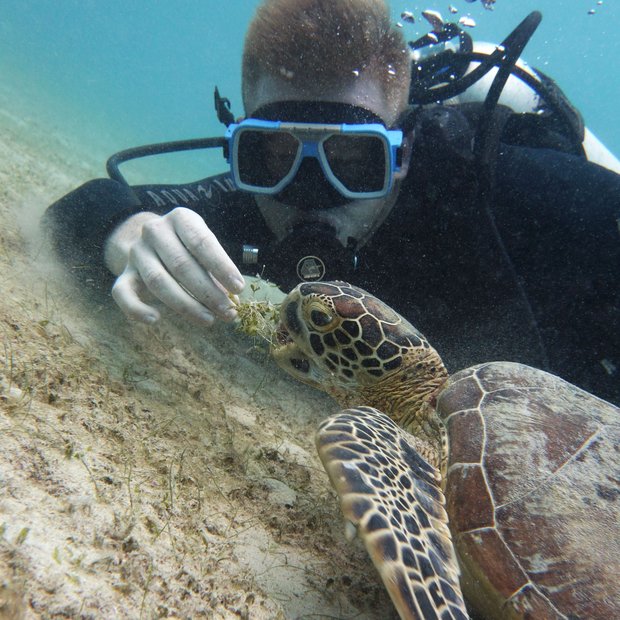
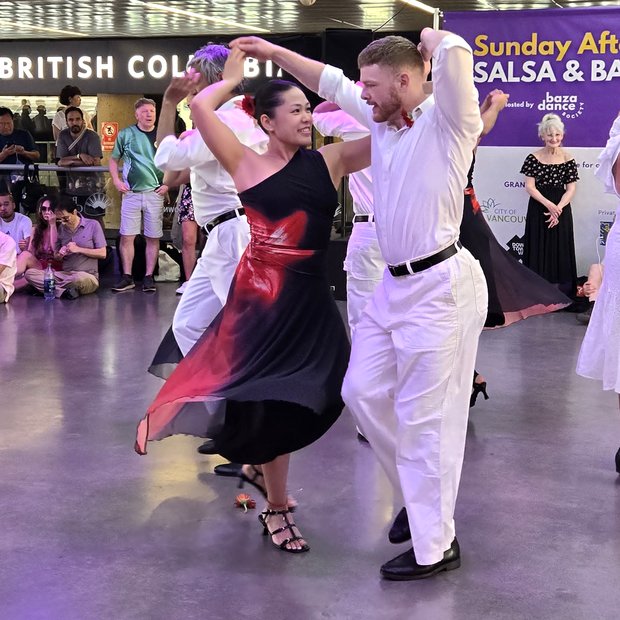
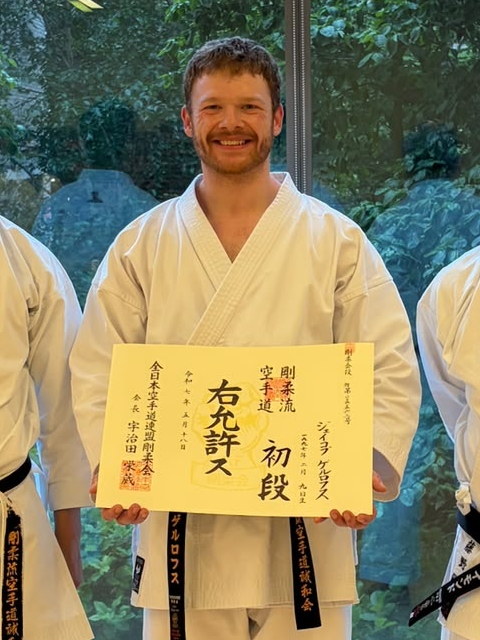
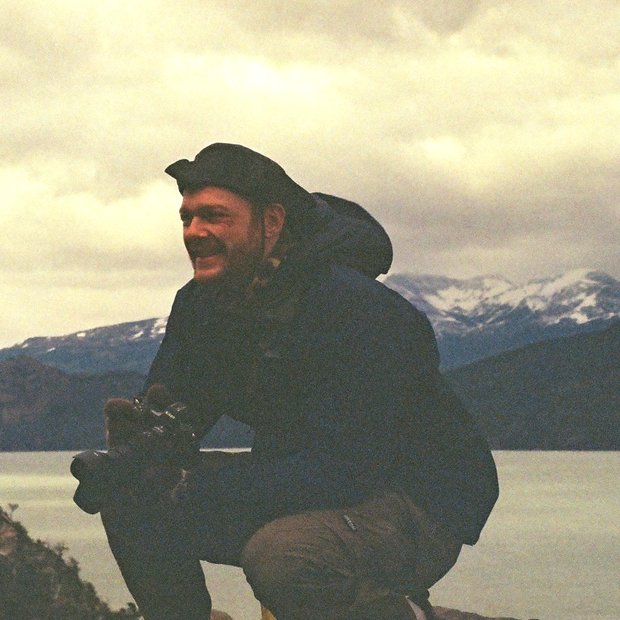
Outside research: Bishop's University Alumni Chapter Leader for Vancouver, avid skier and hiker, hockey fan, student of karate, freelance photographer, travel enthusiast, coffee nerd, salsa dancer, and urban-planning enthusiast.
Education & training

The training behind the research

Ten years of methods training - from neuroscience labs in France and China to a doctoral program at UBC - and the skills, funding, and teaching that came with it.

Education

2019 – 2025

Ph.D., Cognitive Neuroscience - University of British Columbia

Brain, Attention & Reality Lab. Dissertation on social attention and decision-making; 10+ end-to-end studies across eye-tracking and large-scale behavioural experiments.

2015 – 2019

B.Sc. Psychology & Neuroscience (Honours with Distinction) - Bishop's University

Minor in Drama Studies. Lab coordinator in human behavioural research; graduated with distinction.

Awards & funding

  • NSERC Canada Graduate Scholarship - Doctoral (2021)
  • NSERC Canada Graduate Scholarship - Master's (2019)
  • Rhodes Scholarship Finalist, Province of Quebec (2019)
  • $215K+ in research funding secured, including a $75K Mitacs industry partnership
  • Best Early-Career Research Talk - Understanding Vision Conference
  • Research Poster Award finalist - Bishop's University Research Week
  • Undergraduate Prize in Psychology (2015–16 & 2016–17) - first-class standing in program
  • Conference talks: Understanding Vision, CSBBCS, and ESCoP (European Society for Cognitive Psychology)

Teaching & mentoring

  • Teaching Fellow & Teaching Assistant, UBC (2019–2025) - classroom teaching, assessment design, and student support across cognition and methods courses.
  • Trained & supervised junior researchers on eye-tracking hardware setup and analysis protocols.
  • Built a research function from scratch at CheckingIn, embedded with startup leadership.

Research training

  • Visiting Scholar - Prof. Antonia Hamilton's lab, University College London (Fall 2024).
  • Lyon Neuroscience Research Centre, France - research intern (optogenetics, electrophysiology, behavioural testing).
  • Institute of Cognitive Neuroscience, East China Normal University, Shanghai - research intern (episodic memory task design).

Skills & methods

Research methods

Mixed-methods UXR A/B testing Surveys Telemetry & clickstream Usability testing Moderated & unmoderated interviews In-depth interviews (IDIs) Diary studies Field observation & ethnography Eye-tracking

Data & analysis

SQL Python R Statistical modelling Data visualization & dashboarding Triangulation & synthesis Research reports & publications

Research ops & AI

Reproducible, scalable pipelines Git & GitHub LLM-integrated workflows Documentation & protocols Living research repositories

Strategy & communication

Product strategy & roadmapping Long-term research planning Market & landscape assessment Knowledge translation Stakeholder engagement Teaching & workshops Grant & funding acquisition (Mitacs, Tri-council)

Contact

Contact me

I'm open to research roles at product companies, consulting engagements, and conversations about behavioural science and UX.